
The AI Dancing Babies Phenomenon: How a Week-of-the-Week TikTok Trend Hit 50M Views Using Motion Control Tech (March 2026 Breakdown)
The AI Dancing Babies trend hit 50M views in two weeks. Here's the motion control tech behind it, why TikTok's algorithm loves it, and how to create your own viral version in under 5 minutes.
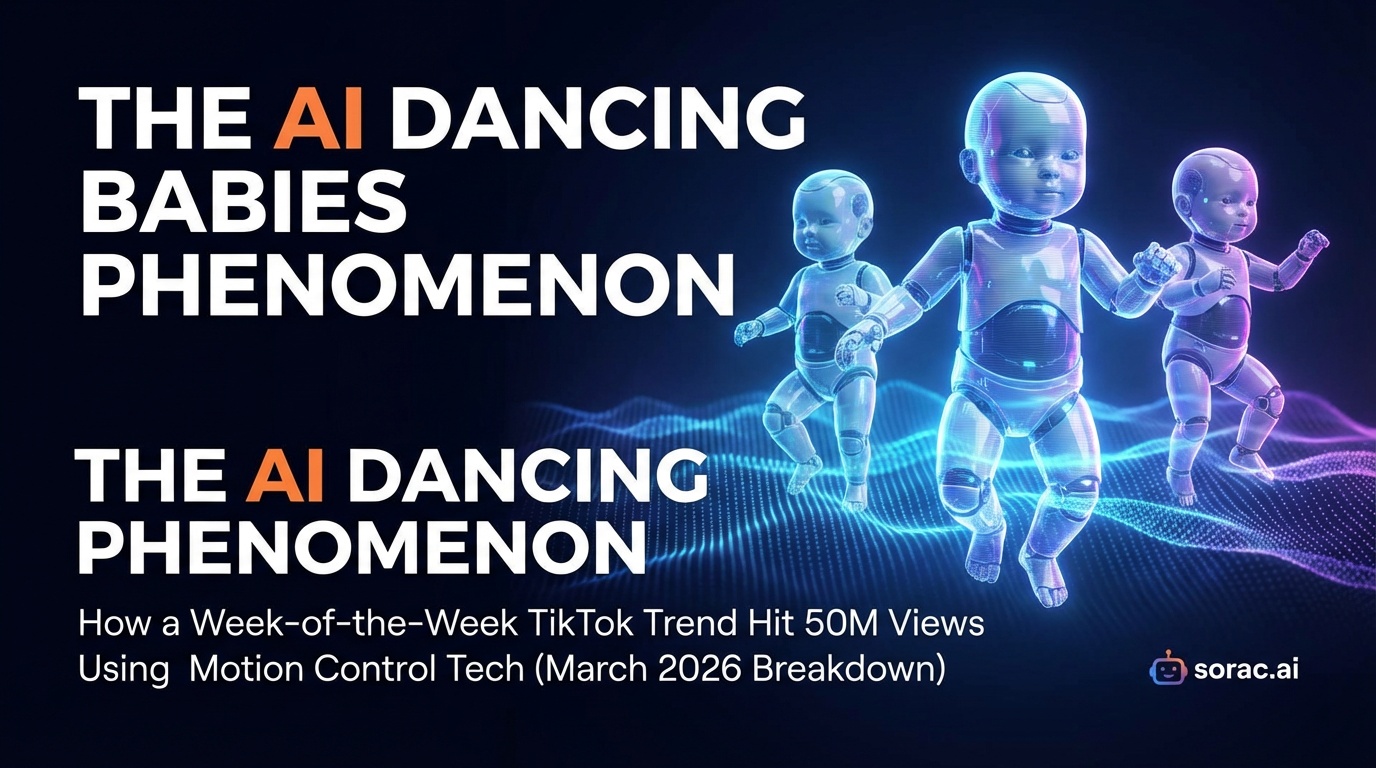
The AI Dancing Babies Phenomenon: How a Week-of-the-Week TikTok Trend Hit 50M Views Using Motion Control Tech (March 2026 Breakdown)
If you've been on TikTok in the last two weeks, you've probably seen them: impossibly cute 3D animated babies, each dressed for a different day of the week, busting moves that would make professional choreographers jealous. The AI Dancing Babies trend has absolutely exploded, racking up over 50 million views and spawning thousands of variations. And here's the kicker—most creators are making these videos in under 5 minutes.
Let me break down exactly what's happening, why this trend is dominating your FYP, and how you can jump on it before it peaks (spoiler: we're probably already there, but there's still time).
What Exactly Is the AI Dancing Babies Trend?
The trend kicked off in mid-March 2026 with a simple concept: 3D-rendered babies, each representing a day of the week, performing synchronized dance routines in adorable outfits. Monday Baby wears business casual (because even babies have to deal with Mondays). Wednesday Baby rocks pink, naturally. Friday Baby is dressed for the club.
What makes these videos stand out isn't just the cuteness factor—it's the smoothness of the animation. According to a March 27 YouTube reaction video analyzing the trend, viewers are praising the "impossibly fluid motion" that makes these AI-generated videos look almost professionally animated. The dance moves are perfectly synced, the facial expressions are surprisingly emotive, and the physics? Chef's kiss.
The most viral versions have hit 5-10 million views each, with creators adding their own twists: babies dancing to trending audio, babies in cultural outfits, even babies recreating famous music video choreography.
Why This Trend Went Nuclear (And What It Tells Us About 2026's Algorithm)
Three factors collided to make this trend unstoppable:
1. Motion Control Tech Finally Got Good
The secret sauce behind these videos is motion control AI—specifically, models like Kling 2.6 that can transfer complex dance choreography from reference videos onto any subject. This isn't the janky, uncanny-valley AI dance content from 2024. We're talking about smooth, believable motion that doesn't make your brain scream "something's wrong here."
The technology copies exact dance moves from professional reference videos and applies them to uploaded images or 3D models. The result? A baby doing a flawless hip-hop routine or a perfect ballet pirouette. It's absurd, it's impressive, and it's shareable.
2. The "Authentic-Looking" AI Sweet Spot
Here's where it gets interesting. According to Bolta.ai's March 28 analysis on "What Makes Content Go Viral in 2026," social media algorithms are getting pickier about obviously synthetic content. But they're rewarding AI-generated videos that feel authentic or intentionally stylized.
The Dancing Babies hit that sweet spot. They're clearly not real (no one thinks these are actual babies), but they're stylized in a way that feels intentional and high-quality. TikTok's algorithm isn't penalizing them as "low-effort AI spam"—instead, it's pushing them because engagement metrics are through the roof.
3. The Day-of-the-Week Hook
Never underestimate the power of a good series format. The Monday-through-Sunday structure gives creators a built-in content calendar and viewers a reason to come back. It's the same psychology that made "outfit of the day" and "what I eat in a day" videos blow up. People love predictable formats with infinite variations.
How to Create Your Own AI Dancing Baby Video (The 5-Minute Method)
Alright, let's get practical. Here's how you can recreate this trend—or better yet, add your own spin to it.
Step 1: Get Your Base Image or Model
You need a starting image. You have three options:
Option A: Generate a baby image with AI
Head to soracai.com/create and use Nano Banana Pro to generate a custom baby character. Try a prompt like: "3D rendered cute baby character, big eyes, smooth skin, wearing [Monday/Tuesday/etc.] outfit, white background, Pixar style, high quality"
Pro tip: Use Nano Banana PRO mode (4 coins vs. 1 coin standard) for the enhanced quality and color accuracy you'll need for smooth video generation. The better your source image, the better your final video.
Option B: Use your own baby photos
This is where it gets personal (and viral). Upload an actual photo of your kid, niece, nephew, or even yourself as a baby. The "my baby as a dancer" angle gets insane engagement because it's personal content with a viral format.
Option C: Go weird with it
This is 2026. People are making dancing versions of their pets, their grandparents, historical figures, even inanimate objects. The Dancing Pickle trend started as a joke and got 2 million views.
Step 2: Choose Your Dance Style
This is where motion control AI comes in. Platforms like soracai.com/ai-dance offer 23+ dance styles powered by Kling 2.6 motion control technology. Here are the top performers for this trend:
The AI copies the exact choreography from reference videos and applies it to your uploaded image. The whole process takes 2-5 minutes and costs 8 coins per video on most platforms.
Step 3: Generate and Download
Upload your image, select your dance style, and let the AI work its magic. The Kling 2.6 motion control tech handles the heavy lifting—mapping the dance movements, maintaining consistent character features, and smoothing out the animation.
Most platforms process these in 2-5 minutes. Grab a coffee, doom-scroll for a bit, and boom—you've got a dancing baby.
Step 4: Edit and Post (This Is Where You Win)
Here's what separates viral videos from flops:
Creative Variations That Are Crushing It Right Now
The "Before Coffee vs. After Coffee" Babies
Two versions of the same baby—one doing a slow, tired shuffle, the other doing an energetic hip-hop routine. Simple concept, massive relatability.
Cultural Heritage Dancers
Babies in traditional outfits from different cultures performing folk dances. This one's getting love from community-specific audiences and crossing over to mainstream FYPs.
The Pet Edition
Forget babies—people are uploading photos of their dogs, cats, and even hamsters. A dancing corgi video hit 8 million views last week. The internet's love for animals + impressive AI = viral gold.
Historical Figure Mashups
Okay, this one's a bit chaotic, but making historical figures do modern dances is apparently hilarious to Gen Z. A dancing Renaissance painting got 3 million views. Make of that what you will.
The Bigger Picture: What This Trend Tells Us About AI Content in 2026
Google just dropped a bomb on March 29, 2026, with their Demand Gen campaign updates. They've integrated Veo (their video AI) directly into Google Ads, letting advertisers generate high-quality video variations from static images. According to their announcement, creator partnerships on YouTube Shorts are seeing a 30% higher conversion lift.
What does this have to do with dancing babies? Everything.
We're entering an era where the barrier between "consumer AI tools" and "professional creator tools" is dissolving. The same motion control tech that's making dancing baby videos is being used by brands to create ad content. The same AI image generators are powering both memes and marketing campaigns.
The creators who win in 2026 aren't the ones with the most expensive equipment—they're the ones who understand how to use AI tools creatively and jump on trends while they're hot.
Your Action Plan (Do This Today)
The Dancing Babies trend is probably peaking right now, which means you have a narrow window to ride the wave. But here's the secret: trends like this are just templates. The real opportunity is understanding why they work (motion control AI + series format + relatable humor) and applying that formula to the next trend.
Because trust me, by next week, we'll all be obsessed with something else. That's the beauty and the curse of TikTok in 2026.
Now stop reading and go make a dancing baby video. Your FYP is waiting.
---
Want to explore more viral AI effects? Check out soracai.com/trends for Ghostface transformations, action figure creators, and other trending AI tools. Or browse 1000+ curated prompts at soracai.com/prompts to level up your AI image game.