AI Image Generator for Beginners: How to Create Your First Viral Photo in Under 3 Minutes (Zero Experience Needed)
Zero design skills? No problem. This beginner's guide shows you how to create viral-worthy AI images in under 3 minutes using simple prompts and free tools.
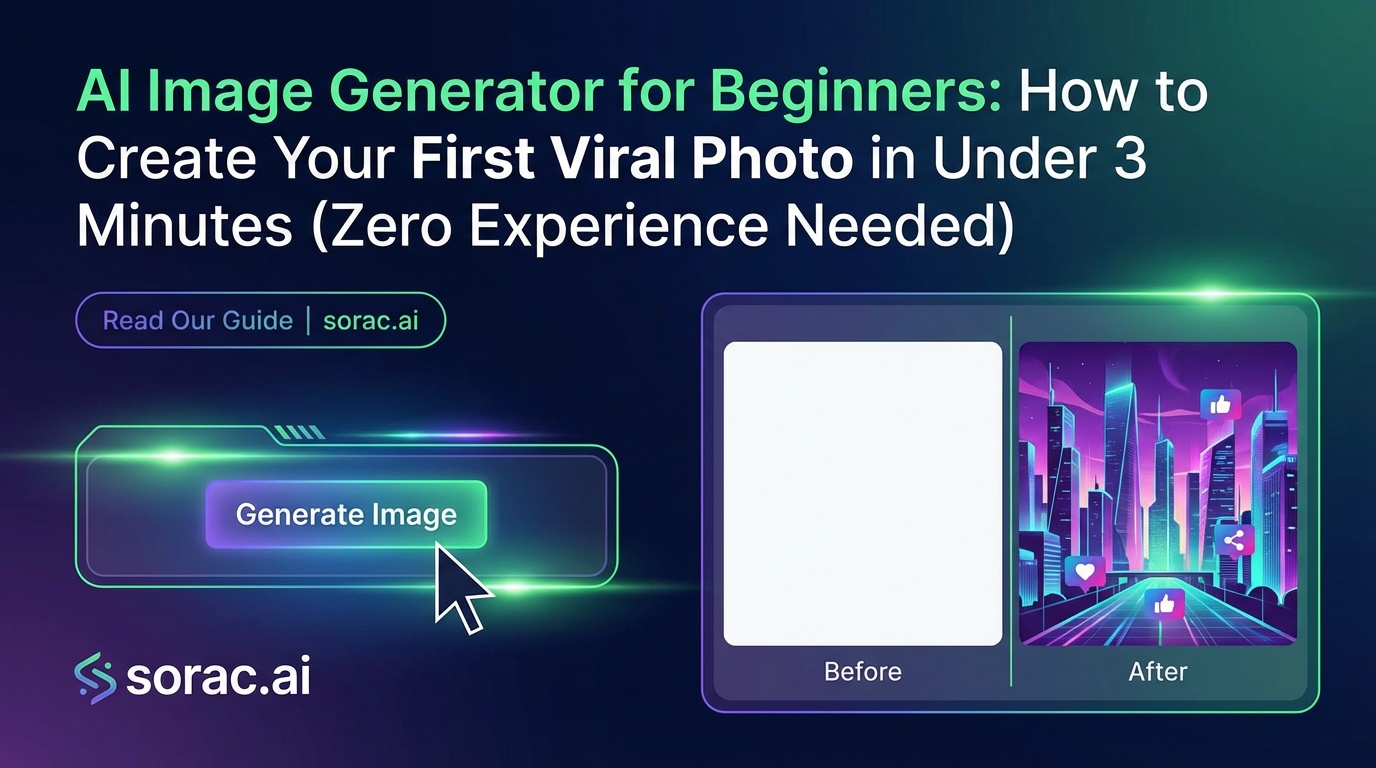
AI Image Generator for Beginners: How to Create Your First Viral Photo in Under 3 Minutes (Zero Experience Needed)
Look, I get it. You've seen those mind-blowing AI images flooding Instagram and TikTok—hyper-realistic portraits, surreal landscapes, meme-worthy edits—and thought "how the hell did they make that?"
Good news: You don't need a design degree, Photoshop skills, or even artistic talent. In 2026, AI image generation is stupid simple. I'm talking "type a sentence, get a masterpiece" simple.
This guide will take you from zero to creating scroll-stopping images in under 3 minutes. No jargon, no BS, just results.
What Is an AI Image Generator? (And Why Should You Care?)
An AI image generator is software that creates original images from text descriptions. You type "golden retriever wearing sunglasses on a beach at sunset," and the AI paints it for you in seconds.
Behind the scenes, these tools use models trained on billions of images to understand what "golden retriever" looks like, how "sunglasses" sit on a face, and what "sunset lighting" means. The current heavy hitters include Nano Banana 2 Pro (what we use at soracai.com/create), DALL-E 3, Midjourney, and Stable Diffusion.
Why care? Because:
The barrier to entry is officially dead.
The 3-Minute Roadmap: Your First AI Image
Forget 20-step tutorials. Here's the fastest path to your first viral-worthy image:
Step 1: Pick Your Platform (30 Seconds)
You need an AI image generator. Free options exist, but quality varies wildly. At Soracai, our Nano Banana 2 Pro model generates images in two modes:
If you're just testing the waters, standard mode works. If you want something Instagram-worthy on the first try, PRO mode is the move. (Pro tip: According to ToolCenter's April 2026 comparison, image-first models like Nano Banana 2 Pro deliver better cost-per-viral-post ratios than video-first tools like Sora 2 when you're creating static content.)
Step 2: Write Your First Prompt (1 Minute)
This is where beginners panic. Don't. Start simple:
Bad prompt: "cat"
Good prompt: "fluffy orange tabby cat sitting in a cardboard box, soft natural lighting, cozy home background, photorealistic"
See the difference? The second one gives the AI context: subject details, lighting, setting, and style.
If you're stuck, steal from the pros. Soracai's prompts library at soracai.com/prompts has 1000+ curated prompts you can copy with one click. Seriously, browse by category, find something close to your vision, tweak it, done.
Formula that works 90% of the time:
[Subject] + [Action/Pose] + [Environment] + [Lighting] + [Style]
Example: "Young woman laughing, sitting at a Parisian café, golden hour lighting, cinematic photography style"
Step 3: Choose Your Aspect Ratio (15 Seconds)
Different platforms need different dimensions:
Nano Banana 2 Pro supports 11 aspect ratios, so pick what matches where you'll post. Most beginners default to 1:1 because it's safe, but 9:16 vertical content gets 2-3x more engagement on social in 2026.
Step 4: Hit Generate and Wait (1 Minute)
Click the button. Watch the magic happen. Standard generations take 30-60 seconds. PRO mode might take slightly longer but delivers noticeably sharper results.
If your first image isn't perfect, regenerate with a tweaked prompt. This isn't failure—it's iteration. Even pros rarely nail it on attempt one.
Level Up: Advanced Tricks for Better Images
Once you've created your first image, these hacks separate amateurs from viral creators:
Use Reference Images (Image-to-Image)
Instead of describing everything in text, upload up to 5 reference images to guide the AI. Want a portrait in a specific art style? Upload an example painting. Need a product photo with certain lighting? Upload a reference shot.
This is criminally underused by beginners. At soracai.com/create, the image-to-image feature lets you control composition, color palette, and vibe way more precisely than text alone.
Be Weirdly Specific
Generic prompts = generic images. Want viral? Get weird.
Specificity triggers the AI's training on niche visual concepts, creating images that feel fresh instead of stock-photo-ish.
Know When to Use PRO Mode
Nano Banana 2 PRO mode costs 4 coins vs 1 coin standard, but the quality jump is massive:
Use standard for brainstorming and rough drafts. Switch to PRO when you've nailed your prompt and need the final, shareable version. Think of it like shooting iPhone video vs RED camera—same idea, different leagues.
Common Beginner Mistakes (And How to Avoid Them)
Mistake #1: Giving Up After One Bad Image
Your first generation will probably suck. That's normal. The AI doesn't read your mind—it reads your words. Adjust your prompt, try again. Viral creators generate 10-20 variations before posting.
Mistake #2: Ignoring Negative Prompts
Most platforms let you specify what you DON'T want. Use it. Add "blurry, distorted, low quality, watermark" to your negative prompt field to filter out common AI artifacts.
Mistake #3: Not Exploring Other AI Tools
Image generation is just the start. Once you're comfortable, branch out:
The ecosystem is bigger than static images. Dance videos, for example, are crushing it right now—creators are uploading baby photos and pet pics, choosing hip-hop or ballet templates, and watching their content hit millions of views.
Mistake #4: Using AI Art Commercially Without Checking Rights
Most AI platforms grant commercial rights, but read the fine print. Nano Banana 2 Pro images generated on Soracai are yours to use, but other platforms have restrictions. Don't get sued over a $4 generation.
What to Do With Your First AI Image
You've created something cool. Now what?
Next Steps: From Beginner to Creator
You've got the basics. Here's your 7-day learning path:
Day 1-2: Generate 20 images in standard mode. Play with prompts, break things, learn what works.
Day 3-4: Try image-to-image with reference photos. Upload a selfie and transform it into different art styles.
Day 5: Use Nano Banana 2 PRO mode for 3-5 final pieces. Feel the quality difference.
Day 6: Explore soracai.com/prompts for inspiration. Copy prompts from categories you like, tweak them, make them yours.
Day 7: Create a 9:16 vertical image, post it to TikTok or Reels with a hook like "I made this in 60 seconds with AI." Watch the comments roll in.
Bonus: Try the AI Dance feature at soracai.com/ai-dance with a photo of your pet or a childhood picture. Upload, pick a dance style (Robot and Shake It To Max are trending hard), wait 2-5 minutes, and you've got viral video content. It's 8 coins but the ROI in engagement is stupid high.
The Bottom Line
AI image generation in 2026 isn't rocket science. It's a creative superpower anyone can learn in an afternoon. You don't need technical skills—just curiosity and willingness to experiment.
Start simple. Use Nano Banana 2 Pro at soracai.com/create. Write a detailed prompt. Pick your aspect ratio. Generate. Tweak. Repeat.
In three minutes, you'll have your first AI image. In three days, you'll be creating content that makes people ask "wait, how did you make that?"
And when they do, send them this guide.
Now stop reading and go create something weird.